





Copyleaks
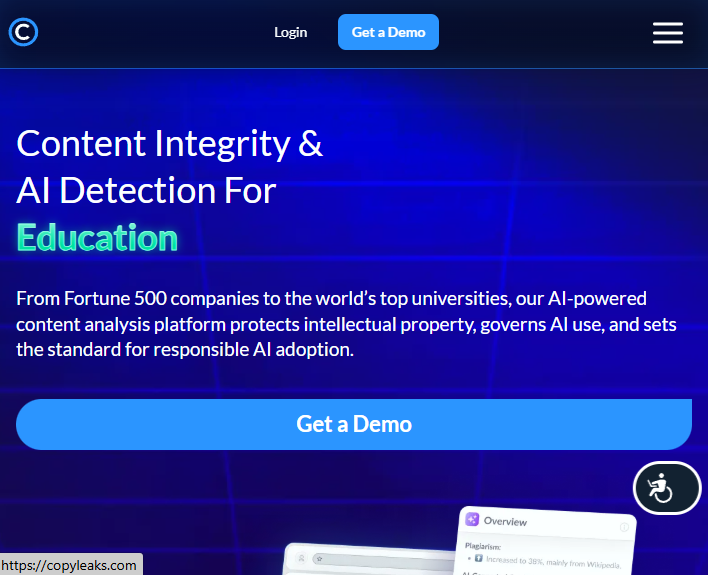
Copyleaks is a comprehensive AI-powered content integrity platform that helps individuals, educational institutions, and businesses detect plagiarism, identify AI-generated text, and protect intellectual property. It combines advanced language analysis, large database comparisons, and flexible integrations to support responsible content creation and quality assurance across multiple languages and formats.
Introduction to Copyleaks
Copyleaks is a SaaS platform founded in 2015 that uses artificial intelligence and machine learning to analyze text for plagiarism, paraphrased content, and AI-generated writing. Trusted by universities, publishers, and large enterprises, it helps verify originality and maintain content integrity in academic, marketing, and corporate environments.
Key Features of Copyleaks
- AI & Plagiarism Detection: Copyleaks scans text to identify copied or paraphrased content and estimates the likelihood of AI generation using advanced linguistic analysis and semantic matching.
- Multi-Language Support: The platform supports detection across 30+ languages for AI content and 100+ languages for plagiarism, making it suitable for global use.
- Extensive Database Searches: Copyleaks compares text against billions of web pages, academic journals, and internal document libraries for thorough verification.
- Detailed Reports: Users receive intuitive reports showing similarity scores, source links, and highlighted sections that match existing content or show AI patterns.
- Security & Compliance: The platform adheres to standards such as PCI DSS, SOC 2, SOC 3, and GDPR, protecting user data and privacy.
- Integration Options: Copyleaks offers plugins and API support, including a Google Docs add-on, classroom LMS integrations, and scalable business APIs for automated workflows.
How Copyleaks Works
Copyleaks uses AI-driven algorithms to examine writing patterns, structure, and context across text submissions. The tool identifies exact matches, paraphrasing, and potential AI-generated patterns by cross-referencing a wide range of sources and applying semantic analysis. This ensures a more nuanced analysis compared with simple keyword matching.
Practical Use Cases
- Academic Integrity: Copyleaks helps schools and universities detect plagiarism and AI use in student submissions, offering educators reliable insights into writing originality.
- Business & Marketing: Marketers use Copyleaks to ensure their content meets brand standards and complies with SEO and quality guidelines, avoiding penalties for low-quality AI output.
- Content Publishing: Publishers and legal teams verify that articles, reports, and whitepapers are original and not unintentionally derivative.
- Intellectual Property Protection: Copyleaks assists organizations in identifying unauthorized reuse of proprietary text and code across the web and internal repositories.
Benefits of Using Copyleaks
- Robust Detection: Combines AI and traditional plagiarism checking to deliver more comprehensive text analysis than basic tools.
- Wide Language and Format Support: Supports detection across many languages and formats, helping global teams maintain content quality and originality.
- Customizable and Scalable: API and LMS integrations enable Copyleaks to fit seamlessly into workflows for individuals, educators, and large enterprises alike.
Limitations and Considerations
Although Copyleaks’ detection technology is sophisticated, like all AI and plagiarism detectors, it may produce false positives or misclassifications, especially with highly edited text or technical writing. Therefore, results should be interpreted as guidance rather than definitive proof of AI authorship or plagiarism.
Related AI Tools




0 Comment